

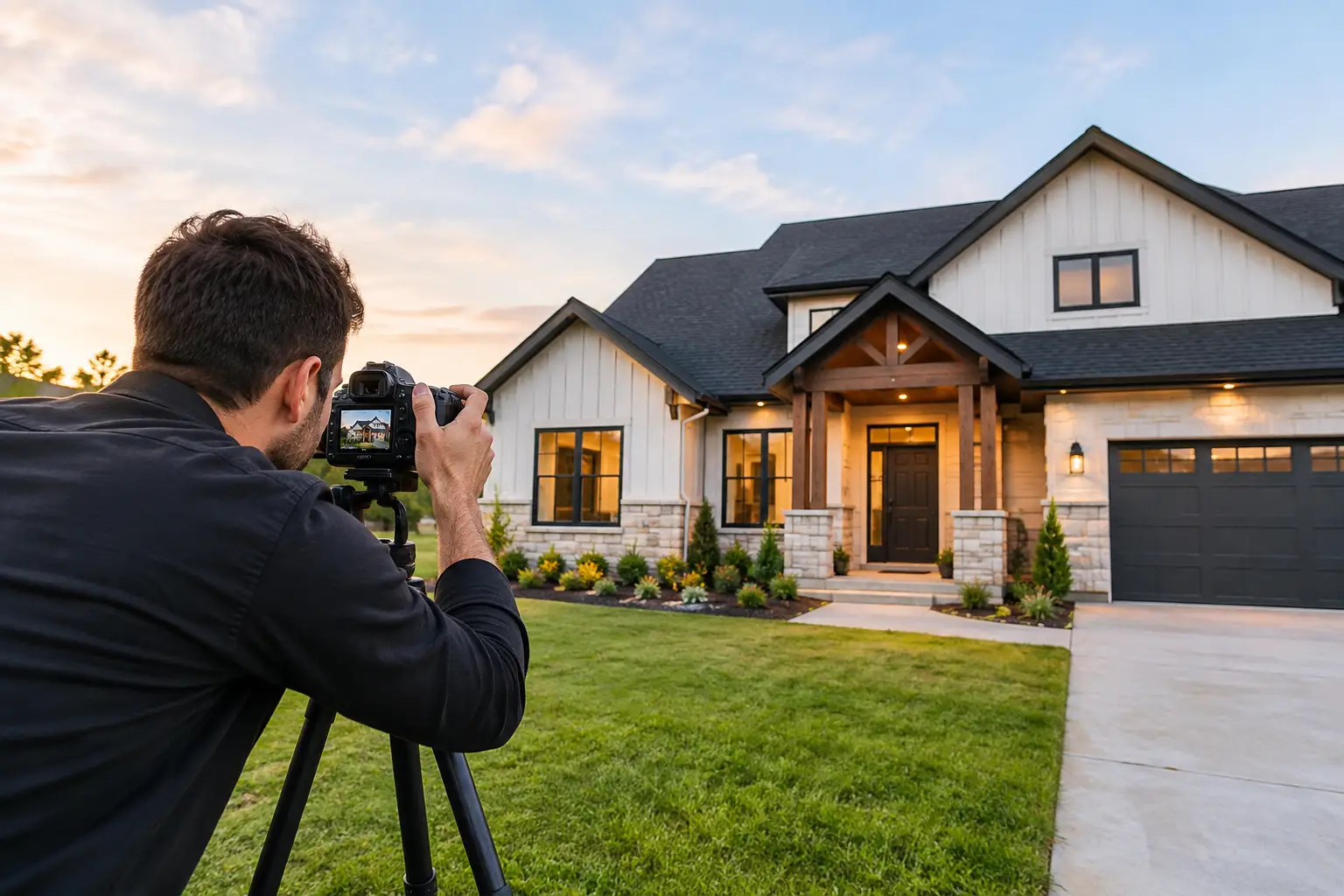
A model home can take months of planning, permitting, labor, and finish selections to bring to life. A buyer may decide whether to tour it in less than 10 seconds online. That gap is why home builder photography services need to do more than make a room look bright. They need to communicate craftsmanship, layout, lifestyle, and value quickly enough to earn the next click, inquiry, or appointment.
For Florida builders, polished visuals support far more than one listing. The same media can help sell a finished inventory home, launch a new community, support pre-construction marketing, update a website, give sales teams usable collateral, and keep social campaigns supplied with fresh content. The right approach creates an organized visual library rather than a one-time photo gallery.
What Builder Photography Must Accomplish
A resale listing and a builder marketing campaign may share a few needs, but they are not the same assignment. An agent often needs to market one home quickly. A builder needs to establish a product standard across homes, floor plans, neighborhoods, and phases of development.
Photography should show how the home is built and how it lives. Buyers want to see the kitchen finishes, natural light, storage, primary suite, covered lanai, pool area, and street presence. They also need visual proof that rooms connect logically. A wide room image may look attractive, but it is more useful when it helps a buyer understand the size, flow, and purpose of the space.
Consistency matters just as much. When a builder has several homes available, mismatched editing, inconsistent composition, or uneven lighting can make the product feel less established. A dependable photography partner uses a repeatable process so each home supports the same brand standard, whether it is a move-in-ready townhome, a waterfront custom build, or a new model in an expanding community.
Home Builder Photography Services That Support Sales
The best media package depends on the home, construction stage, price point, and where the asset will appear. Still photography remains the foundation because it works everywhere: MLS, builder websites, portal listings, email campaigns, brochures, paid ads, and social posts.
HDR photography is especially valuable for builder inventory. It balances Florida’s bright exterior light with interior detail, making windows, cabinetry, flooring, and architectural features easier to see. Unlimited HDR photos give marketing teams enough coverage to tell the full story without forcing them to choose between the kitchen, primary bath, flex room, rear elevation, and amenity areas.
For larger communities, aerial photography adds context that ground-level images cannot provide. FAA-licensed drone images can show proximity to water, preserve areas, golf courses, downtown districts, beaches, major roads, and community amenities. The trade-off is that aerials should clarify location, not distract from the home. Aerial coverage is most effective when the surrounding area is a true selling point.
Video adds movement and emotional pacing. A cinematic walk-through works well for a flagship model, luxury spec home, or community launch page where buyers need a stronger sense of arrival and flow. Short-form reel videos serve a different job: earning attention on Instagram Reels, TikTok, YouTube Shorts, and paid social. Builders often need both, but not for every property. A quick-turn inventory home may benefit more from strong photos, a floor plan, and a concise vertical reel than from a longer production.
Floor plans reduce uncertainty for buyers comparing multiple homes online. They help prospects understand bedroom placement, room dimensions, garages, patios, and usable square footage before touring. That can lead to more informed inquiries and fewer appointments from buyers whose needs do not match the layout.
For homes that are furnished only partially, empty, or still under construction, virtual staging can help buyers visualize a finished room. It is useful for showing scale and intended use in a dining room, office, loft, or secondary bedroom. The images must be labeled appropriately and should reflect the home’s actual proportions and features. Virtual staging should support the real property, not create expectations the home cannot meet.
Plan the Shoot Before the Home Is Perfect
Photography quality is often determined before the photographer arrives. Builders and site teams should schedule media when the home is genuinely camera-ready, not merely close to completion. Small unfinished details stand out in photographs: missing outlet covers, unpainted touch-ups, construction materials near the entry, untrimmed landscaping, empty soap dispensers, or protective film left on appliances.
A practical pre-shoot walkthrough protects the investment. Confirm that all lights work, blinds are positioned consistently, counters are clear, exterior hoses and bins are moved, vehicles are out of the driveway, and model-home signage is placed intentionally. If the home has a pool, outdoor kitchen, or covered patio, prepare those spaces with the same attention given to the interior.
Timing also affects the result. Midday may be efficient for interiors, while a later appointment can improve exterior warmth and reduce harsh shadows. Twilight photography is a strong add-on for premium homes with landscape lighting, pools, architectural elevations, or dramatic views. It is not mandatory for every build, but one standout twilight hero image can give a launch campaign a stronger first impression.
Construction-stage photography requires a different plan. Progress images can be useful for buyer updates, investor communications, trade documentation, and social content, but they should be clearly separate from finished-home marketing. A partially built home is rarely ready for the same visual treatment as a completed model.
Build a Media Package Around the Buyer Journey
A single photo set cannot carry every stage of a builder’s sales process. Early-stage marketing may need renderings, land or neighborhood aerials, a model-home video, and community lifestyle images. Once inventory is complete, the priority shifts to property-specific photos, a floor plan, virtual-tour presentation, and fast MLS-ready delivery.
Think about where a buyer encounters the home first. On MLS and Zillow, the opening photo sequence needs to earn attention immediately. On a builder website, the collection should answer deeper questions about finishes, layouts, elevations, and nearby amenities. On social media, a vertical video can create the first spark of interest, while the website and listing details provide the information needed to convert that interest into a tour.
This is why asset delivery matters. Marketing teams should receive files sized and organized for the channels they actually use, not a folder that requires hours of sorting and reformatting. MLS-compliant virtual-tour slideshows, listing-ready photos, vertical video cuts, aerials, floor plans, and social-ready content should work together without slowing down publication.
Virtuals1 supports this workflow with listing-focused photography, aerial imagery, 3D tours, floor plans, virtual staging, and video options that can be scheduled and delivered quickly. For builders managing multiple homes or communities, one media partner can reduce coordination time and maintain a more consistent look across active inventory.
Choose Reliability Over a One-Time Portfolio
A photographer’s portfolio should look good, but builder teams also need to evaluate operational performance. Can the provider handle several homes in a week? Are appointments dependable when sales centers, superintendents, cleaners, and stagers all need to coordinate? Is turnaround fast enough to publish a newly completed home while interest is high?
Ask how the team handles weather, access changes, reshoots, and community restrictions. Florida weather can shift quickly, and construction schedules do not always hold. A responsive provider should communicate clearly, adjust when practical, and make it easy to add services when a home needs more than standard photography.
Price matters, but the lowest shoot price is not always the lowest marketing cost. If a vendor delivers late, misses key features, requires repeated follow-up, or produces files that cannot be used across platforms, internal time costs rise quickly. Transparent package pricing and targeted add-ons make it easier to match the investment to the value of the home.
Use the Finished Assets Long After Launch
Builder photography has a longer shelf life than most listing media. A strong model-home gallery can support sales for an entire phase. Detail images of cabinetry, tile, outdoor living, and community amenities can be reused in brochures, email nurture campaigns, recruiting materials, and future product launches when the finishes remain relevant.
Review results after each campaign. Notice which hero images earn clicks, which reels generate inquiries, whether aerials help explain the location, and which layouts lead to qualified tours. The goal is not to use every available media type on every home. It is to invest in the assets that help the right buyer see the value clearly and take the next step.