

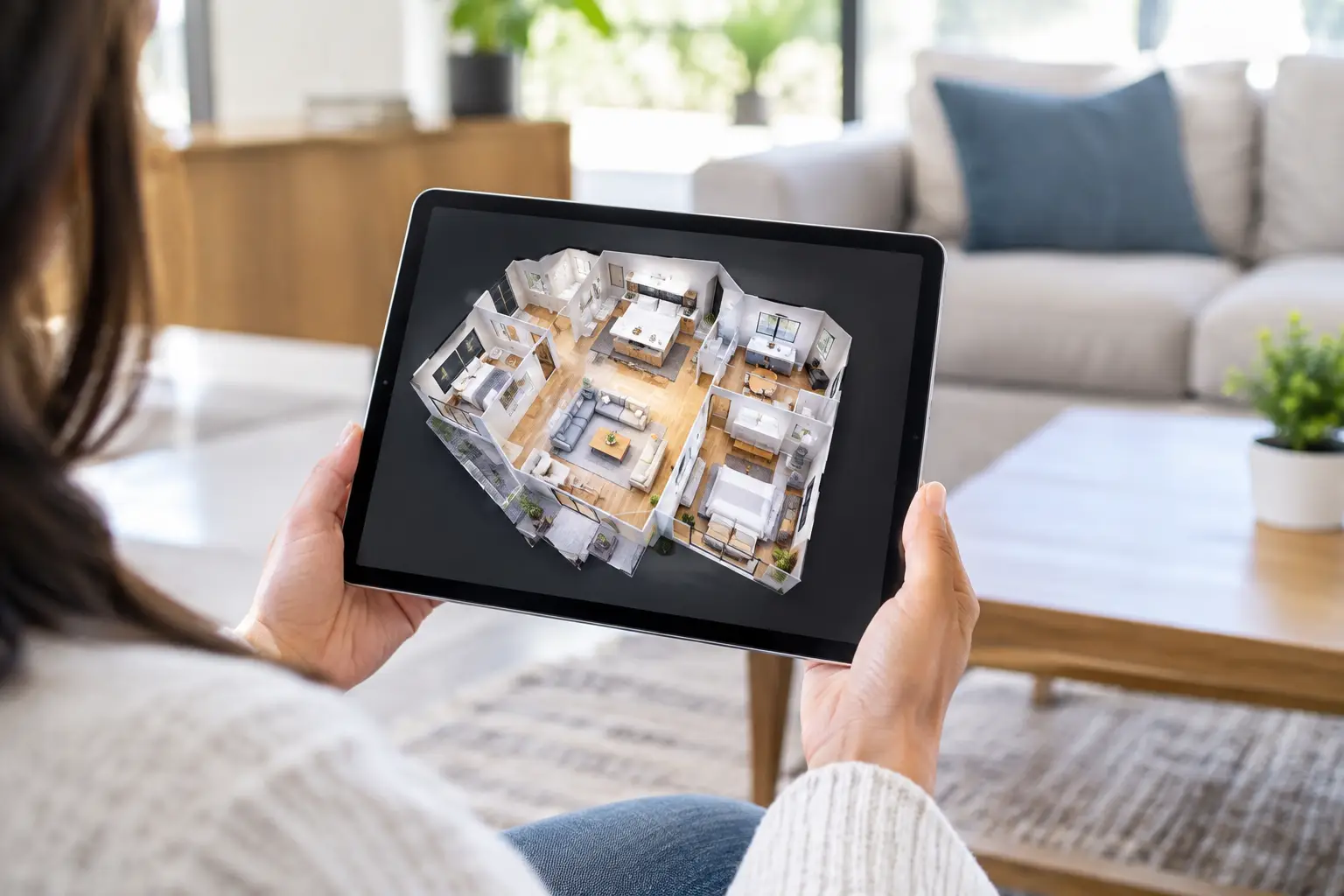
A buyer scrolling Zillow at 10 p.m. may compare a dozen homes before contacting a single agent. Strong listing photos get that buyer to stop. Zillow 3D tours give them a reason to stay, move room to room, and decide whether the home deserves an in-person showing.
For Florida agents working against active inventory, seller expectations, and fast MLS deadlines, that extra time on a listing matters. A 3D walkthrough cannot sell a property by itself, but it can make the online presentation more complete and help serious buyers arrive better informed.
What Zillow 3D Tours Add to a Listing
A Zillow 3D Home tour is an interactive walkthrough that lets shoppers navigate through a property from a phone, tablet, or desktop. Instead of watching a fixed video sequence, the buyer controls the pace. They can look around the kitchen, revisit a primary suite, check the relationship between the living area and patio, or see how bedrooms connect to the rest of the home.
That control solves a common online-listing problem: photos show features, but they do not always explain flow. A wide-angle image can make a room look appealing, yet buyers still want to know what sits beyond the doorway, whether the laundry room is close to the garage, or how the pool area connects to the main living space. A well-captured tour answers many of those questions before the first call.
The value is practical. Buyers who understand the layout are more likely to book a showing for the right reasons. Agents can spend less time clarifying basic room relationships and more time discussing location, upgrades, offer strategy, and fit.
Why Zillow 3D Tours Can Improve Buyer Engagement
Zillow is a major starting point for residential search, especially for relocation buyers and consumers browsing outside normal business hours. A listing with professional photography, complete property details, and an immersive tour gives shoppers more reasons to interact rather than bounce back to search results.
A 3D tour can also support Zillow’s interactive floor plan experience when available. That combination helps buyers move between a top-down view and individual rooms, making square footage and layout easier to understand. For a large home, a split-bedroom plan, a townhouse with multiple levels, or a property with a detached guest suite, that clarity can be more persuasive than another gallery image.
More engagement does not automatically mean more offers. Price, condition, location, listing accuracy, and market conditions still determine results. But better visual information can improve the quality of inquiries. A buyer who has already toured the home digitally is often further along in the decision process than someone who only glanced at the first photo.
This is especially useful in Florida markets where vacation-home shoppers, out-of-state buyers, and investors may not be able to visit immediately. They need enough visual detail to decide whether a trip, a video call, or a same-week showing is worthwhile.
Which Listings Benefit Most
Nearly any residential listing can benefit from a 3D walkthrough, but the return is strongest when the tour makes a meaningful question easier to answer. Layout-driven homes are a clear example. Open-concept properties, waterfront condos, new construction, renovated homes, and larger estates all gain value when buyers can see how spaces connect.
Occupied homes can benefit as well, provided they are prepared properly. A clean, organized property reads better in every medium, and a 3D tour is less forgiving than a single still image because buyers can explore more of the home. Sellers should remove personal clutter, secure medications and valuables, open blinds where appropriate, turn on interior lights, and clear pathways between rooms.
Vacant listings are another strong use case. Without furniture, buyers may struggle to judge room scale or imagine how they would live in the space. Pairing a tour with virtual staging in selected listing photos can help solve both sides of that problem: the tour documents the real layout, while staged images show possible use of the space.
Not every property needs every add-on. A compact condo with a straightforward plan may get more immediate value from excellent HDR photography, a floor plan, and a short social video. The right package depends on the property, price point, buyer pool, and the agent’s marketing plan.
How to Use a 3D Tour With the Rest of Your Media
The strongest listings do not ask one asset to do every job. Photography should lead the first impression with bright, well-composed images that make buyers want to click. A Zillow 3D tour should then help them explore the home at their own pace. Floor plans add dimensions and layout clarity, while video can create emotion and movement for social media.
Think of each asset as serving a different stage of attention. Listing photos earn the click. The 3D tour holds interest and answers practical questions. A cinematic walkthrough video or short reel gives agents content for Instagram Reels, TikTok, YouTube Shorts, and paid social campaigns. Drone imagery establishes the property’s setting, lot position, nearby water, golf course, or community context.
For a listing launch, have the full media package ready before the property goes live whenever possible. Publishing photography first and adding other assets days later can slow early momentum. Buyers are most curious when a listing is new, and sellers expect the online presentation to look complete from day one.
Virtuals1 can coordinate listing photography, Zillow 3D Home Tours, floor plans, video, aerial imagery, and staging through one appointment, which helps agents avoid juggling separate vendors and delivery schedules. For time-sensitive listings, that operational simplicity is often as valuable as the media itself.
What Makes a Tour Feel Professional
A tour needs more than coverage. It needs a thoughtful capture path. The experience should move naturally from entry to main living areas, then into bedrooms, baths, outdoor spaces, and relevant secondary areas. Buyers should not feel lost or forced to jump randomly between rooms.
Preparation affects the final result. Ceiling fans should be off during capture, televisions should be off or display neutral screens, blinds and curtains should be set intentionally, and doors should be positioned to create clean sightlines. The goal is not to make the home look artificial. It is to make it easy to understand.
Lighting matters, too. Florida homes often have strong daylight, but mixed interior lighting can create uneven color from room to room. Professional capture and quality control help the tour feel consistent, particularly in homes with dark cabinetry, bright windows, or transitions from interior spaces to lanais and pool decks.
Accuracy matters more than perfection. Do not use a tour to hide a tight hallway, an unusual room shape, or a dated bath. Buyers will discover those details eventually. Show the property clearly, then use the listing description, photography, and agent communication to provide context around improvements, possibilities, and value.
Set Expectations With Sellers
Sellers often understand why photos matter. They may need a clearer explanation of why a 3D tour is worth adding. The simplest answer is that it gives buyers a better way to experience the home before they visit. It can also reduce uncertainty for long-distance shoppers and help the listing compete more effectively against homes with richer online media.
Be specific about what the seller needs to do. A tour captures more of the home than a typical photo selection, so preparation should extend beyond the rooms they expect to see featured. Closets, hallways, utility areas, and outdoor spaces may be visible depending on the property and capture plan.
It also helps to set a realistic expectation: a 3D tour is not a substitute for cleaning, pricing, repairs, or responsive follow-up. It is a marketing tool that makes a well-prepared listing easier to evaluate online. When the property and presentation are aligned, the result feels credible rather than overproduced.
A buyer should finish the tour with one thought: “I understand this home well enough to want to see it.” That is a useful standard for every listing asset, and it is a strong reason to make immersive media part of your next launch.