

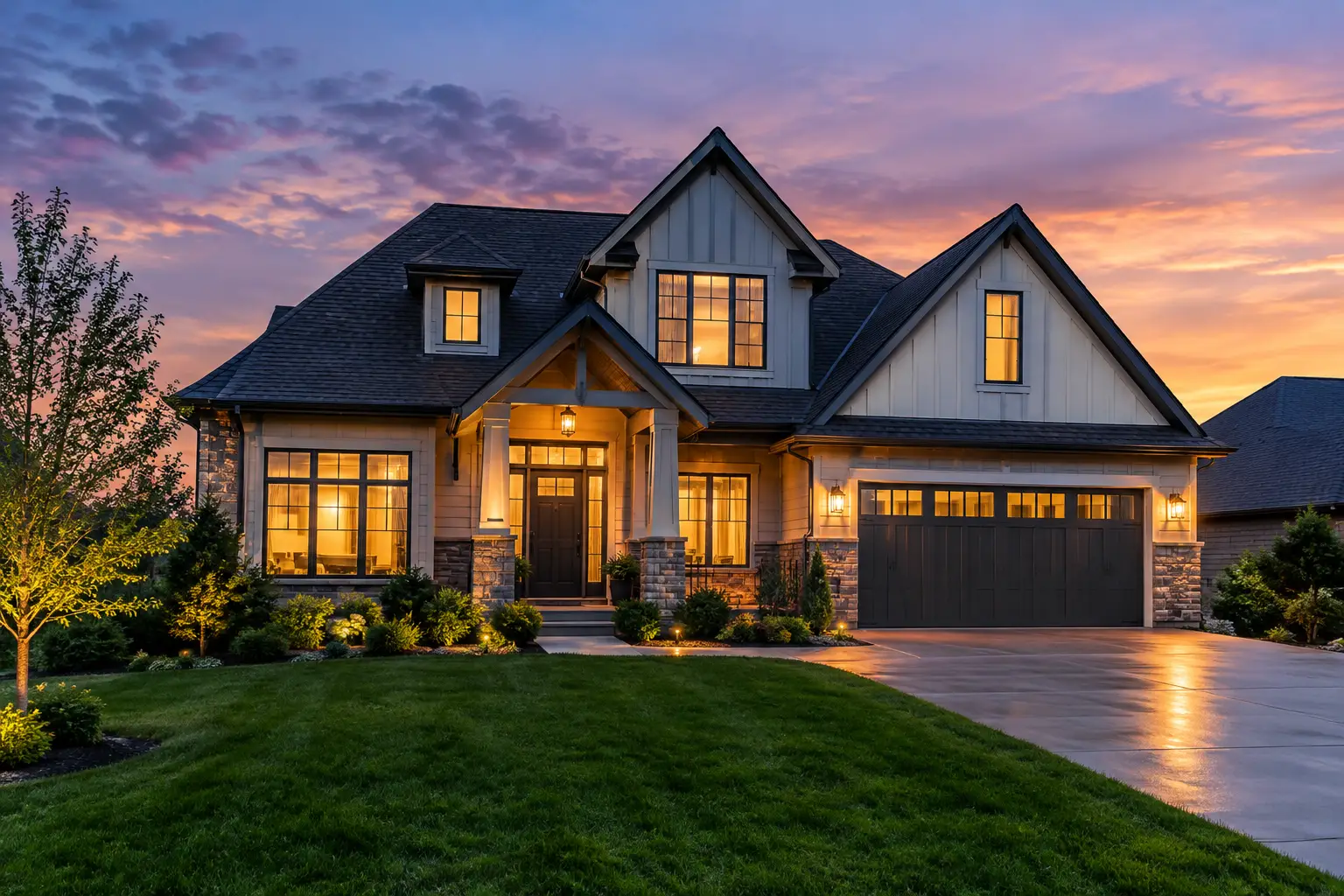
A strong exterior photo has one job: make a buyer stop scrolling long enough to imagine arriving home. Twilight conversion real estate photos can give a listing that extra pull by turning a standard daytime exterior into a polished evening scene, complete with a richer sky, warm window glow, and a more inviting curbside feel.
For Florida agents working against fast listing timelines, this is often a practical alternative to scheduling a separate dusk appointment. The right conversion can add a premium marketing image to MLS, Zillow, social posts, and property flyers without delaying launch. But it is not a universal fix. The original daylight photo, the property type, and the way the finished image is used all matter.
What Is a Twilight Conversion?
A twilight conversion is an edited exterior real estate image designed to look like it was photographed around sunset or early evening. An editor starts with a daytime photo and adjusts the sky, ambient light, landscaping, window illumination, pool lighting, and exterior fixtures to create a believable twilight presentation.
This differs from a true twilight shoot, where the photographer captures the home on-site during a short window around sunset. A real dusk session records natural reflections, actual lighting behavior, and changing sky color. A conversion uses digital editing to create a similar visual effect from an existing exterior image.
For many listings, the result is a high-impact hero image at a lower cost and with less scheduling friction. It can be especially useful when a property needs to go live quickly, the seller cannot accommodate another appointment, or weather makes a sunset shoot uncertain.
Why Twilight Conversion Real Estate Photos Get Attention
Online buyers make quick decisions about which listings deserve a closer look. A well-composed twilight exterior stands apart from the usual grid of bright midday facades, particularly on portals and social feeds where visual contrast drives the first click.
The appeal is not just a dramatic sky. Evening-style imagery can make architectural lighting, a pool, landscaped paths, patio spaces, and water views feel more intentional. On a waterfront home, for example, a warm exterior paired with a subtle dusk horizon can help communicate the lifestyle buyers are considering, not only the square footage they are comparing.
That emotional response is useful, but it should support an accurate presentation of the property. The goal is to make real features look their best, not to create lighting, views, or amenities that do not exist. The strongest conversions feel polished without calling attention to the edit itself.
Where the image works best
A converted twilight image is often most effective as the first exterior photo in a slideshow, a feature image in a property website, or the opening frame of an Instagram Reel. It can also provide a strong visual anchor for just-listed graphics and email marketing.
It should not replace the full set of daytime listing photos. Buyers still need clear, accurate views of the front elevation, lot, landscaping, driveway, pool, and outdoor spaces. Think of the twilight image as the attention-getter, while the rest of the media package answers practical questions and moves prospects toward a showing.
When a Conversion Makes Sense
The best candidates usually start with a clean, professionally photographed daytime exterior. Straight lines, balanced exposure, a visible facade, and a tidy yard give the editor enough detail to build a credible final image.
Homes with strong exterior lighting, attractive pools, covered lanais, modern facades, landscaped walkways, or water-facing patios tend to benefit most. Luxury listings are an obvious fit, but the approach is not limited to high-price properties. A well-kept condo, townhome, new construction property, or suburban family home can gain attention when the exterior has a clear visual focal point.
Timing is another reason to choose a conversion. If the listing must be published before a weekend open house, waiting for the next suitable sunset may not be practical. A conversion lets the agent use the existing photo session efficiently while still creating an elevated lead image.
When a real twilight shoot is the better choice
There are situations where on-site dusk photography is worth the additional coordination. A waterfront property with major reflections, a home with elaborate landscape lighting, or an estate where sunset views are a key selling feature can benefit from the authenticity of a true twilight session.
The same is true when the property has unusual lighting conditions. Large glass walls, extensive outdoor entertaining areas, fire features, or a skyline view can be difficult to recreate convincingly from a daytime image. If the actual evening atmosphere is part of the value proposition, photograph the real thing.
A conversion also cannot solve weak source material. If cars block the driveway, the lawn is patchy, the facade is heavily shadowed, or the photo is poorly framed, editing may improve the image but will not turn it into a premium hero shot. Preparation and professional composition still come first.
What Makes a Conversion Look Believable
The difference between a useful listing image and an obvious edit comes down to restraint. A believable twilight conversion keeps the home recognizable and uses lighting that makes sense for the structure.
Window glow should align with the rooms and glass surfaces that are visible. Outdoor fixtures should appear where real fixtures exist. Pool lights should reflect the actual shape and location of the pool. The sky should complement the scene rather than overpower it. A neon orange horizon behind a modest home with no warm lighting can look more like an advertisement than a property photo.
Color balance matters as well. Twilight images should retain detail in the roofline, landscaping, and exterior finishes. If shadows become solid black or the house takes on an unnatural blue cast, buyers may question the quality before they ever schedule a tour.
A quality real estate media team also understands the difference between enhancement and misrepresentation. Editing can improve weather, brightness, and mood. It should not remove permanent neighboring structures, change the lot configuration, add views, or materially alter the condition of the home.
Build the Image Into the Listing Strategy
The best media decisions are connected to how and where the listing will be marketed. Use the converted image where it can earn attention, then support it with assets that build buyer confidence.
For an MLS listing, pair the twilight hero image with a complete HDR photo set that clearly shows the home in daylight. For Zillow and Trulia, combine it with accurate property details, a 3D home tour when appropriate, and a floor plan that helps buyers understand the layout. For social media, use the image as the visual opening, then follow with a short video clip, aerial perspective, or room-by-room sequence.
This approach gives the listing both emotion and proof. The twilight image creates interest; the broader media package helps a buyer decide the property is worth seeing in person.
For agents managing multiple active listings, consistency also matters. Adding a twilight conversion as a defined add-on makes it easier to deliver a premium look without rebuilding the entire marketing plan for every property. Virtuals1 can produce the core listing media and the conversion in a coordinated workflow, helping agents keep launch schedules moving.
Set Seller Expectations Before the Shoot
A brief conversation before the appointment can prevent disappointment later. Explain that a twilight conversion needs a strong front exterior image and that the final result will be a stylized marketing photo, not a record of the exact weather or time of day.
Ask sellers to turn on exterior lights if a dusk-style image is planned, even when the main session occurs during daylight. Confirm that the front of the home is clear of vehicles, trash bins, hoses, temporary signs, and seasonal clutter. These small details have an outsized effect on the finished exterior.
It also helps to discuss the property’s strongest feature. Is it the pool, the new front elevation, the outdoor kitchen, the waterfront setting, or the neighborhood-facing curb appeal? That answer helps determine whether the front facade, backyard, or pool area should receive the twilight treatment.
A Better First Impression Without a Slower Launch
Twilight conversion photos work best when they are chosen for a reason, not added simply because they look dramatic. Select them when the property has visual features that benefit from warmth, contrast, and an evening atmosphere. Use a real twilight shoot when the authentic sunset experience is central to the sale.
For the right listing, one carefully edited twilight image can turn an ordinary first impression into a reason to click, save, share, and book a showing.