

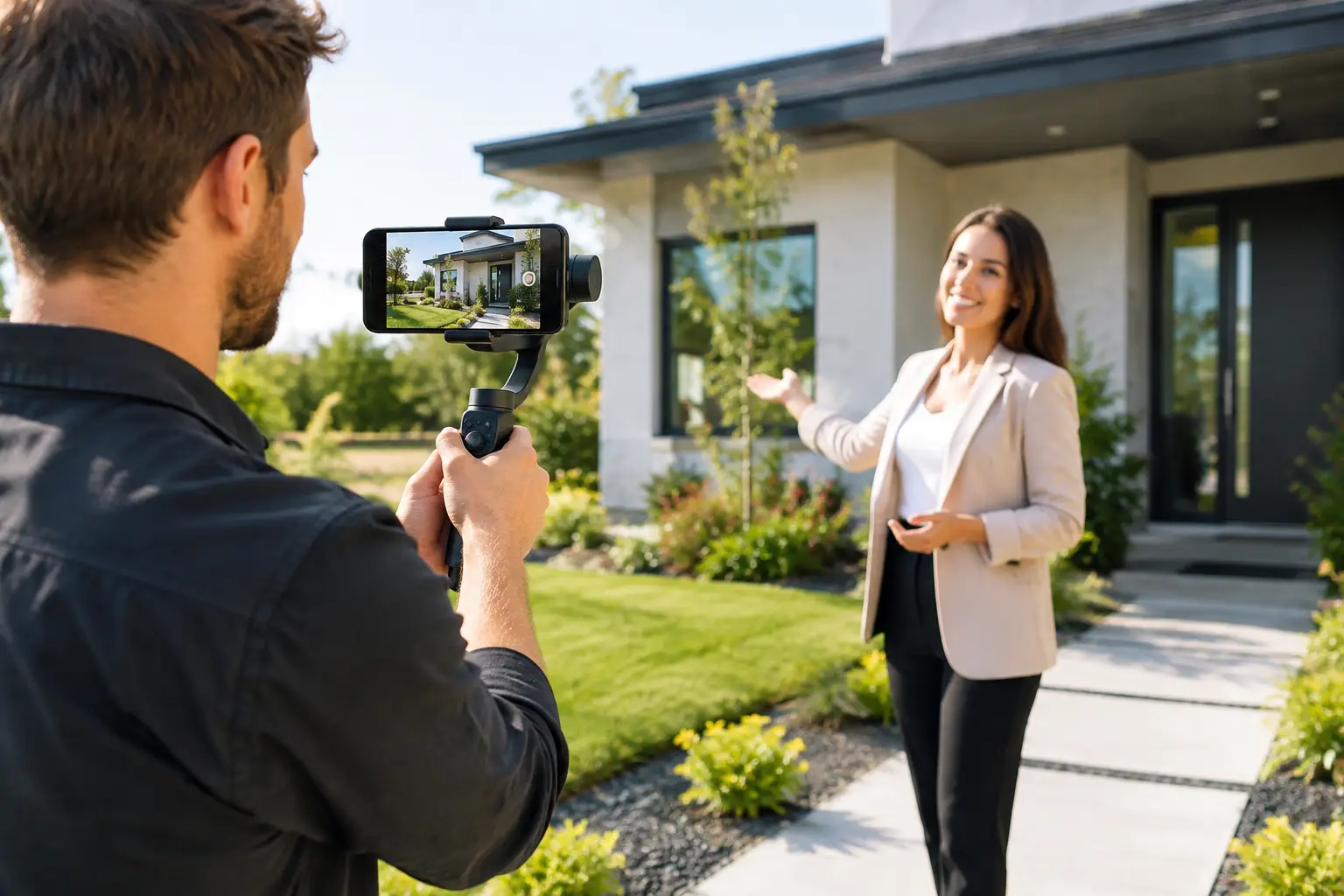
A buyer scrolling between school pickup and dinner will not stop for a generic exterior shot. They stop when a video quickly answers a more useful question: What would it feel like to live here? Effective real estate video for social media makes that answer immediate, visual, and specific enough to turn attention into a showing request.
For Florida agents, that matters because listing competition is rarely just about price. A waterfront view, screened lanai, renovated kitchen, oversized lot, walkable location, or flexible commercial layout can be the detail that wins the click. Video gives those selling points movement, context, and pace that a static listing photo cannot provide on its own.
Start With the Listing’s Strongest Reason to Stop
Every social video needs a lead feature. It is not necessarily the front of the home, and it is rarely a slow logo animation. Open with the feature most likely to make the right buyer pause: the pool view through open sliders, a bright kitchen island, a drone reveal of a canal-front lot, or the scale of a two-story living room.
The right hook depends on the property and audience. A condo near downtown may lead with location and skyline access. A family home may lead with a backyard built for weekends. A commercial property may need to show parking, access, frontage, loading, or the condition of the space before interior finishes. The video should make the listing’s best argument before the viewer has a chance to swipe away.
That focus also protects the message from becoming a feature dump. Square footage, bedroom count, upgrades, community amenities, and location details all matter, but they do not all deserve equal time. Choose one primary reason to care, then use the remaining footage to support it.
Build Real Estate Video for Social Media Around a Short Story
A strong property reel is not simply a collection of attractive clips. It has a clear progression: a fast hook, a visual tour that establishes flow, proof of the lifestyle or location, and a direct next step.
For many residential listings, 20 to 45 seconds is enough. Start with the strongest frame, move through the main living area and kitchen, show the primary suite or best secondary feature, then finish with the outdoor space or a location shot. Add concise on-screen text such as “New roof,” “Gulf access,” “5 minutes to downtown,” or “No HOA.” Text helps viewers who watch with sound off and keeps the selling points clear without forcing too much narration into a short video.
Not every property should follow the same order. A luxury listing can benefit from a slower cinematic pace and longer establishing shots. An entry-level home may perform better with a quick, practical walkthrough that highlights renovated systems, storage, and monthly-payment appeal. A vacant home may need virtual staging clips to help buyers understand room scale and furniture placement. The point is not to make every listing look identical. It is to give buyers enough visual proof to take the next action.
Use Vertical First, Then Create Supporting Versions
Vertical 9:16 video is the practical starting point for Instagram Reels, TikTok, Facebook Stories, and YouTube Shorts. It fills the mobile screen and puts the property in the format most people already use for quick discovery.
That does not mean every video should only live on social media. A horizontal walkthrough can work well on a listing website, YouTube, email campaign, or presentation to sellers. The efficient approach is to plan the shoot for both orientations when possible. Capture clean, stabilized footage with room to crop, then edit versions that match the platform instead of forcing one format everywhere.
Keep important text away from the top and bottom edges of vertical video, where platform buttons and captions can cover it. Use large, high-contrast text and short phrases. Buyers should understand the key point even when they are watching on a small screen in a bright parking lot.
Show What Photos Cannot Fully Communicate
Professional HDR photography remains the foundation of a listing because buyers use photos to scan rooms, compare homes, and revisit details. Video has a different job. It communicates flow, scale, light, views, and transitions between spaces.
A smooth approach into the kitchen shows how the island relates to the living room. A walk through open sliders demonstrates the connection between indoor living and the lanai. A drone clip can show proximity to the beach, golf course, marina, downtown district, or major roadways without relying on a map screenshot. These are details that make a home easier to picture before an in-person tour.
Avoid camera movement for its own sake. Fast spins, repeated whip pans, and trendy transitions can distract from the property and date the content quickly. Controlled movement, clean composition, and natural light usually create a more credible result. Social media rewards attention, but buyers still need a truthful sense of the space.
Pair the Right Media Assets With the Right Listing
The best video plan is rarely video alone. A listing with strong outdoor features may benefit from cinematic walkthrough footage, aerial imagery, twilight photos, and a short vertical reel cut from the same shoot. A vacant property may need virtual staging in key rooms before video production, especially when the empty space is difficult to read. A home with a complex layout can gain value from a floor plan or 3D tour that lets serious buyers explore beyond the reel.
This is where a single production partner can save time. Rather than coordinating separate photographers, drone operators, editors, and tour providers, agents can schedule the media package around the listing’s actual needs and marketing deadline. Virtuals1 can combine listing photos, FAA-licensed aerials, cinematic video, 3D tours, floor plans, virtual staging, and social-ready reels so the launch feels coordinated instead of pieced together.
The trade-off is budget and speed. Not every property needs every add-on. For a straightforward listing, polished photos and a concise reel may be the best return. For a luxury, waterfront, new-construction, or highly competitive property, the added context of drone video, twilight imagery, and a full walkthrough can help justify a broader campaign. Match the package to the listing’s price point, buyer profile, and defining features.
Publish With a Clear Next Step
A beautiful video without a call to action can generate views that go nowhere. End with a simple direction: “Schedule your private tour,” “Message for pricing and details,” “See the full listing,” or “Contact us for a showing.” The exact wording should match the platform and how your team handles leads, but viewers should not have to guess what happens next.
Captions matter too. Use the first line to reinforce the hook, then include the essential listing details and location. Avoid copying the MLS remarks word for word. Social captions should be easy to scan and should add context the video does not already show. If the property has a feature buyers frequently ask about, such as flood zone, dock access, community rules, rental policy, or recent improvements, address it accurately.
Consider publishing more than once with different edits. One reel might lead with the pool and target lifestyle buyers. Another might lead with the renovated kitchen and speak to local move-up buyers. The footage can support multiple angles without misrepresenting the home. Watch which openings earn saves, shares, profile visits, direct messages, and showing inquiries, then apply those lessons to the next listing.
Common Mistakes That Cost Attention
The biggest mistake is treating social video as an afterthought once the MLS listing is live. By then, the first burst of listing interest may already be gone. Schedule media early enough to launch photos, video, tours, and social assets together or in a deliberate sequence.
Another mistake is making the agent the main subject for too long. Personal branding has value, particularly in market-update or behind-the-scenes content, but a property reel should keep the listing at center stage. A quick introduction can work when it adds personality or expertise. Thirty seconds of talking before buyers see the home usually does not.
Finally, do not overpromise. Filters that alter water color, editing that hides nearby roads, or text that makes unsupported claims may win a temporary view but erodes trust when a buyer arrives. Professional real estate media should make a property look its best while staying true to what buyers will experience.
A well-planned social video does more than fill a content calendar. It gives buyers a reason to picture themselves in the property, gives sellers visible proof of your marketing effort, and gives your listing a stronger chance to earn the next click, message, and showing.