

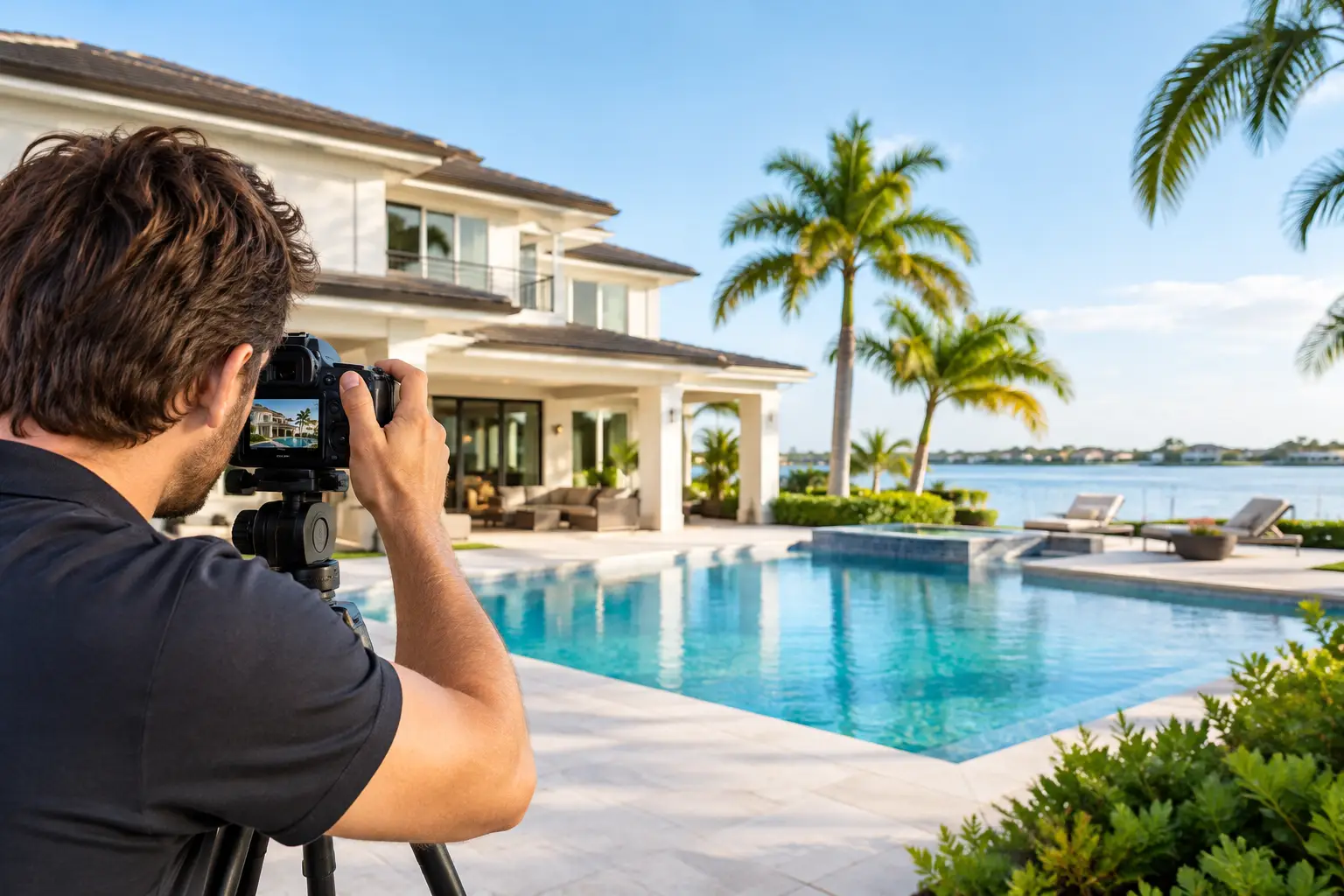
A Florida listing can gain or lose a buyer before the buyer ever checks the address. On Zillow, MLS, and social feeds, your first image is competing with waterfront views, new construction, renovated kitchens, and professionally marketed homes in the same price range. Florida real estate photography gives your listing a real chance to stop the scroll, earn the click, and turn online interest into a scheduled showing.
That does not mean every property needs every possible media add-on. It means the visual plan needs to fit the property, the target buyer, and the way the listing will be marketed. A clean condo in a high-demand neighborhood needs sharp, accurate images delivered fast. A waterfront estate, rural acreage property, or new community may need aerials, video, a 3D tour, floor plan, and twilight images to communicate what buyers cannot understand from still photos alone.
Why Florida Real Estate Photography Carries More Weight
Florida buyers often shop remotely before they shop in person. Relocation buyers may be comparing homes from another state. Second-home buyers may be narrowing their options from a phone. Local buyers still want enough information online to decide whether a property is worth fitting into a busy weekend of showings.
That makes the media package part of the sales process, not an afterthought. Bright, well-composed HDR photography helps buyers understand room size, light, finishes, and flow. It also gives agents stronger assets for listing portals, email campaigns, brochures, social posts, and digital ads.
Florida adds a few specific challenges. Strong sunlight can create blown-out windows and harsh exterior shadows. Condos can have tight rooms and changing views. Coastal homes need interiors and outdoor living spaces presented in balance. A skilled real estate photographer manages those conditions so the home looks polished without looking misleading.
The goal is accuracy with appeal. Over-editing skies, stretching rooms beyond recognition, or hiding property limitations may generate clicks, but it can create disappointment at the showing. Better listing media sets clear expectations while putting the strongest features first.
Start With the Photos Buyers Expect
Professional HDR photos are the foundation of almost every residential listing. Buyers expect to see the front exterior, kitchen, primary bedroom, main living spaces, bathrooms, outdoor areas, and the features that distinguish the property. Those images should feel consistent from room to room, with straight lines, balanced exposure, natural color, and clean composition.
For agents, quantity matters less than coverage and selection. Too few photos leave questions. Too many near-duplicates weaken the listing’s pace. The right set tells a buyer how the home lives: where they enter, where they gather, where they work, where they sleep, and what makes the property different.
Before the appointment, encourage sellers to prepare for the camera. Clear kitchen counters, remove pet items, hide cords, open blinds where the view supports the room, and turn on interior lights if requested. Small preparation steps protect the value of the shoot and reduce distractions that cannot be fixed in editing.
Speed matters just as much as image quality. If a property is ready to launch, waiting several days for media can mean missing the first wave of buyer attention. Same-day turnaround gives agents the flexibility to publish quickly, respond to seller expectations, and get a new listing in front of buyers while it is fresh.
Build the Right Media Package for the Property
The best Florida real estate photography package is rarely a one-size-fits-all purchase. Start with professional listing photos, then add assets that answer the buyer’s biggest questions.
Drone imagery for location and land
FAA-licensed drone photography is especially valuable when location is part of the value proposition. It can show a home’s proximity to the beach, golf course, marina, downtown district, lake, preserve, major roads, or community amenities. For acreage, commercial sites, and large estates, aerials provide the context ground-level photography cannot.
Aerials are not necessary for every property. A small interior condo with no meaningful exterior context may benefit more from a 3D tour or floor plan. But if the lot, water view, rooftop, neighborhood position, or outdoor amenities affect the buyer’s decision, drone images can make those advantages immediately clear.
Video for movement and emotion
Cinematic walk-through video gives a listing pace and atmosphere. It works well for homes with a strong layout, luxury finishes, resort-style outdoor spaces, or a story that benefits from movement. A video can carry a buyer from the entry to the main living area, through a wall of sliders, and out to a pool or water view in a way individual photos cannot.
Short-form reel videos serve a different job. They are designed for Instagram Reels, TikTok, YouTube Shorts, and paid social placements where the opening seconds matter most. An AI-generated reel can also help agents reuse listing photography in a vertical, social-ready format without scheduling a separate video production.
Use video strategically. For a starter home priced for speed, excellent photos and a strong social reel may be the most efficient mix. For a luxury listing, a cinematic walk-through can support higher perceived value and give the agent a stronger presentation tool for sellers.
3D tours and floor plans for buyer confidence
A Zillow 3D Home Tour helps buyers explore at their own pace and can increase confidence before they request a showing. It is particularly useful for occupied homes, multi-level properties, vacation homes, condos with unusual layouts, and listings targeting out-of-area buyers.
Floor plans answer a more practical question: how does the space connect? Photos can make rooms look attractive, but they do not always explain bedroom placement, hallway flow, or the relationship between indoor and outdoor areas. A floor plan helps serious prospects determine whether the layout works for their family, furniture, work-from-home needs, or investment goals.
These tools can reduce low-intent showings, though the outcome depends on price point and buyer demand. In a fast-moving market, they also help a qualified buyer act with more certainty. In a slower market, they give the listing more reasons to hold attention.
Virtual staging when an empty room needs context
Vacant properties can photograph cleanly but still feel difficult to read. Buyers may struggle to judge scale or picture how an empty living room, den, or bedroom could function. Virtual furniture staging can solve that problem at a fraction of the cost of physical staging.
The key is restraint. Stage the rooms that need context, use furniture appropriate to the home’s price point and style, and clearly identify virtually staged images where required. Virtual staging should help buyers visualize possibilities, not conceal condition issues or alter permanent features.
Match the Deliverables to Where Buyers Will See Them
A listing media plan should be built around distribution. MLS requires clear, accurate property images. Zillow and Trulia reward listings that give buyers more information to explore. Social platforms favor vertical video, strong opening frames, and content that makes sense without a long explanation.
The same photo set can support each channel, but the presentation should change. Your MLS gallery needs broad property coverage. A Zillow listing benefits from photography, tours, and floor plans that extend time spent with the home. Instagram and Facebook need a clear lead image or short video clip that gives viewers a reason to stop scrolling.
This is also why consistent file delivery matters. Agents should receive organized, platform-ready assets without spending hours renaming images, resizing video, or chasing separate vendors. A single production partner can make it easier to launch a coordinated campaign rather than a patchwork of disconnected posts.
What Reliable Listing Media Looks Like
Real estate schedules move quickly. Sellers reschedule, weather changes, inspection periods tighten, and a listing date can shift with little notice. The media provider you choose needs to be responsive before, during, and after the appointment.
Look for clear package pricing, dependable scheduling, experienced photographers, licensed drone operators, and delivery timelines that match your launch plan. Ask whether the company can handle photography, aerials, 3D tours, video, floor plans, twilight images, and virtual staging under one workflow. That capacity matters most when you manage multiple listings or work within a brokerage that needs a consistent standard.
Virtuals1 is built for that kind of volume and speed, pairing unlimited HDR listing photos with a MLS-compliant virtual-tour slideshow and practical add-ons for agents who need more than a photo gallery. The advantage is not simply having more services available. It is being able to choose the right services for each listing without slowing down your marketing calendar.
A polished listing does not need to look expensive for the sake of it. It needs to make the next step easy for the right buyer: click, explore, ask a question, and schedule the showing. Choose media that makes the property’s value visible before the door ever opens.